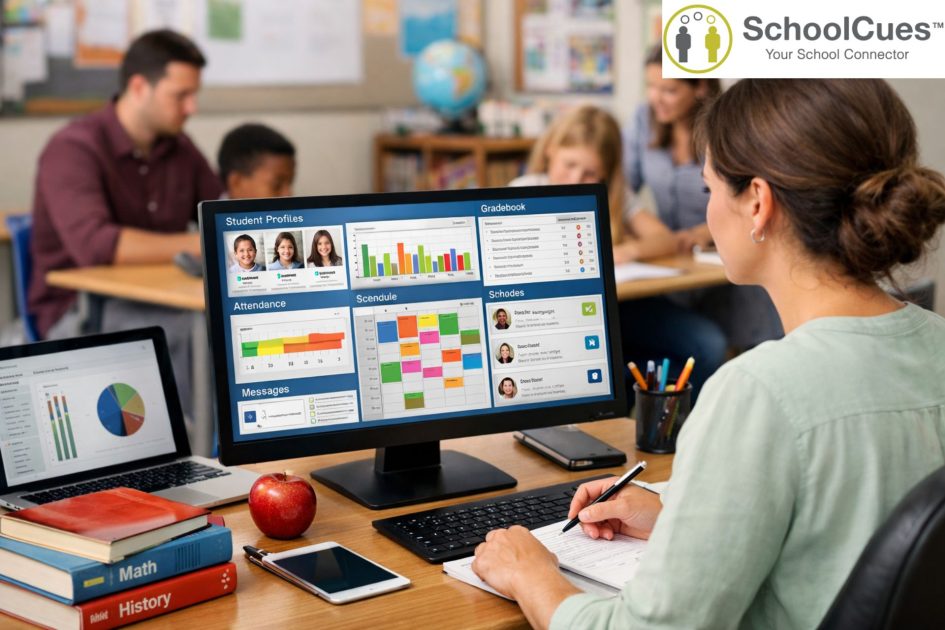
Small schools often struggle to balance academic priorities with administrative demands. With limited budgets and small teams, schools are increasingly looking for low-cost student information systems that simplify administration while supporting academic needs. This is where choosing the right SIS can make a meaningful difference—not by adding complexity, but by simplifying how schools operate every day.
Why choosing the right SIS matters for small schools
A Student Information System plays a central role in how a small school operates day by day. From managing student records to tracking attendance and communicating with families, the right SIS can significantly reduce administrative workload. Small schools need systems that are easy to use and practical, not overly complex. The best SIS solutions help schools stay organized, improve efficiency, and support staff without requiring major changes to existing workflows.
How SIS needs look different for small schools
Small schools have different SIS needs than large districts or institutions. With smaller teams and limited technical resources, staff need quick access to essential information such as student data, attendance, grades, and communication tools. A good school management system for small schools prioritizes simplicity, speed, and flexibility. Instead of advanced features designed for large organizations, small schools benefit most from systems that support everyday tasks clearly and consistently.
Why large, complex SIS platforms don’t work for smaller teams
Many SIS platforms are built to serve schools of all sizes, but this often results in systems that are too complex for small teams. These platforms may require lengthy setup processes, extensive training, or ongoing configuration. For small schools, this can slow down operations rather than improve them. When an SIS feels difficult to navigate or maintain, staff spend more time managing software instead of focusing on students, teachers, and parents.
The must-have SIS features small school teams use
When evaluating SIS software for small schools, it’s important to focus on features that support everyday operations rather than long, complex feature lists. Small school teams consistently rely on the following core capabilities:
- Centralized student records to keep academic, administrative, and contact information in one secure place
- Attendance tracking that is quick to update and easy to review
- Gradebooks that support day-to-day classroom needs without added complexity
- Parent and staff communication tools to ensure timely, consistent updates
- Basic reporting for visibility into student progress and school operations
- Enrollment tools and integrations that reduce manual data entry and help maintain accurate information
For a deeper breakdown, schools often review SIS features small schools should prioritize to make sure they’re choosing a system that aligns with real-world workflows rather than unnecessary extras.
Why all-in-one SIS platforms work better for small schools
An all-in-one SIS platform combines essential school management functions into a single system. This approach allows schools to manage student information, enrollment, academics, and communication without relying on multiple tools. For small schools, all-in-one systems simplify workflows, reduce errors, and make data easier to manage. Schools exploring budget-friendly SIS tools for small schools often find that integrated platforms deliver better value by improving efficiency without increasing costs.
How an integrated SIS saves time and lowers operational costs
An integrated SIS reduces administrative effort by connecting key processes across the school. Enrollment data flows directly into student records, attendance updates link with academic reports, and communication remains consistent across departments. This integration minimizes repetitive tasks and reduces the need for multiple software subscriptions. Over time, small schools benefit from lower operational costs, improved data accuracy, and smoother daily operations.
How SchoolCues fits into this approach for small schools
SchoolCues is an all-in-one SIS designed specifically for small schools. It brings together student information management, enrollment, tuition management, attendance, gradebooks, and communication into a single platform. By focusing on ease of use and practical functionality, SchoolCues helps small school teams manage operations more effectively without added complexity. Schools following specialized education models can also explore the benefits of implementing a Student Information System in Montessori schools to understand how an SIS can support both administrative needs and educational philosophy.
Final thoughts: choosing an SIS that fits your school’s workflow
The best SIS for a small school is one that works naturally with how the school already operates. All-in-one SIS platforms work better because they balance essential features with simplicity and usability. By choosing a system designed specifically for small schools, administrators can reduce administrative workload, improve efficiency, and create better experience for students, teachers, and families.
If you’re evaluating SIS options for your school, it’s worth choosing a system that’s built for small teams, not one that forces you to adapt to enterprise complexity. SchoolCues helps small schools manage student data, enrollment, and communication from one intuitive platform. Explore how SchoolCues can support your school’s workflow and simplify daily operations.