Category Uncategorized
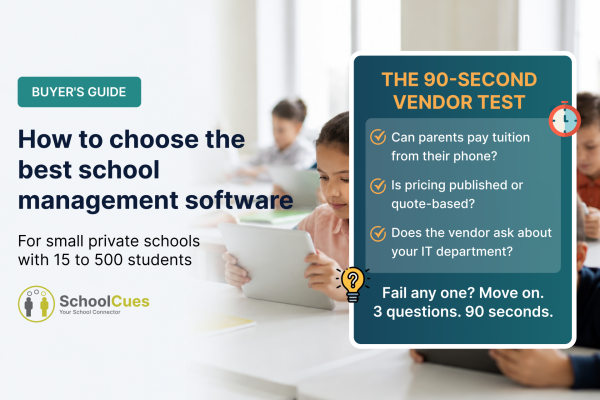
Most of these schools make the same buying mistake. They evaluate school management software the way a 5,000-student district does: feature checklists, RFP templates, committee reviews. That process was designed for institutions with procurement departments. Your school has one admin… Continue Reading →
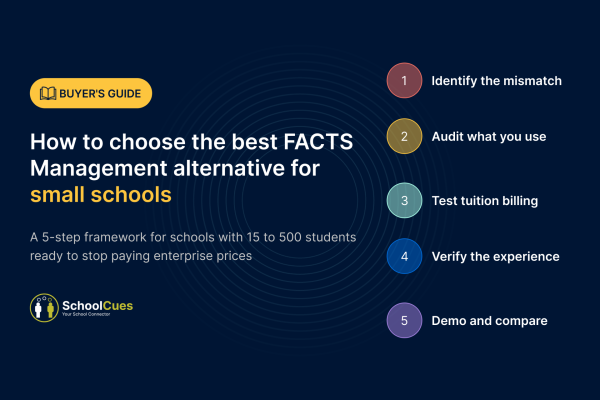
24,206 private schools operate in the United States. They enroll 5.47 million students. The average school has roughly 184 students, and 66% are religiously affiliated. Page Source: https://nces.ed.gov/programs/digest/d00/tables/PDF/table205.pdf FACTS Management was built for the top 10% of that market…. Continue Reading →

TL;DR — AI in school management is delivering real, measurable time savings for small private schools — specifically in attendance anomaly detection, communication drafting, report generation, and scheduling assistance. This 90-day plan shows exactly how to introduce these tools without… Continue Reading →

TL;DR — Teacher-student relationship quality is the single strongest in-school predictor of academic outcomes, attendance, and parent satisfaction — stronger than curriculum, class size, or technology tools. The specific way EdTech supports these relationships in small schools is not by… Continue Reading →

TL;DR — School admissions software replaces paper applications, manual document chasing, and scattered follow-up emails with a digital system where families apply online, upload documents, and receive automated status updates. Small schools using digital admissions report 60% faster enrollment processing… Continue Reading →

TL;DR — Short-staffed small schools are not losing capacity because they need more staff — they are losing it to manual administrative tasks that technology handles automatically. The average small school administrative team recovers 500–900 hours annually by automating attendance… Continue Reading →

TL;DR — School communication software replaces scattered emails, phone trees, and paper notices with one platform for parent messaging, attendance alerts, fee reminders, and emergency broadcasts. Small schools using dedicated communication tools save 5+ admin hours per week and see… Continue Reading →

TL;DR — Most faculty meeting problems trace to three structural causes: meeting time filled with content that belongs in email, meeting frequency set by habit rather than need, and no clear outcome defined before the meeting starts. This audit and… Continue Reading →

TL;DR — Most school management platforms were designed for public school districts or large secular private schools. Religious schools — Catholic, Lutheran, Islamic, Christian, faith-based independent — have specific operational requirements those platforms handle poorly or not at all. This… Continue Reading →
TL;DR — The official budget of a small private school shows staff wages, software subscriptions, and operating expenses. It does not show the $80,000–$140,000 annual cost of manual administrative operations: labor directed at automatable tasks, late tuition revenue, staff turnover… Continue Reading →

TL;DR — Learning barriers are not only academic — they begin upstream in attendance gaps, disengaged parents, teacher administrative overload, and communication failures that separate students from the support they need. School management software addresses these upstream causes simultaneously: automating… Continue Reading →

In a microschool, one educator often handles everything—teaching, planning, parent communication, and administration. Attendance tracking can easily become just another task on an already full plate. But in reality, it’s much more than a daily checkbox. It supports compliance, strengthens… Continue Reading →
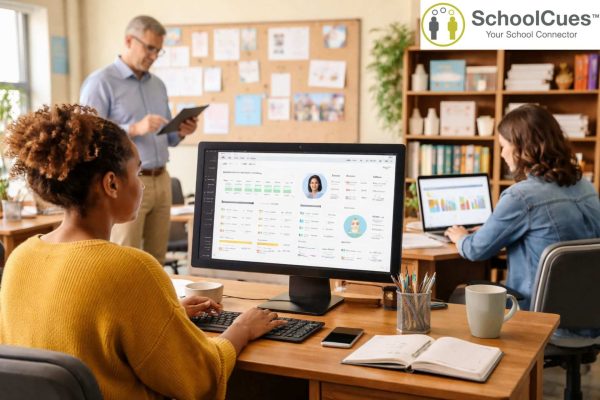
Managing student information has always been an important part of running a school—but for small schools, it can quickly become overwhelming. Limited staff, tight budgets, and growing expectations from parents and administrators mean that even simple tasks can turn into… Continue Reading →
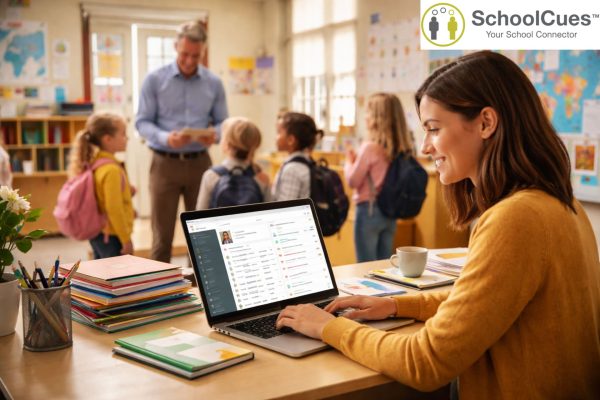
ERP school management software is often positioned as an essential tool for running modern schools efficiently. It promises centralized data, automated workflows, and better visibility across operations. However, for small schools, the reality can be very different. Limited staff, tight… Continue Reading →
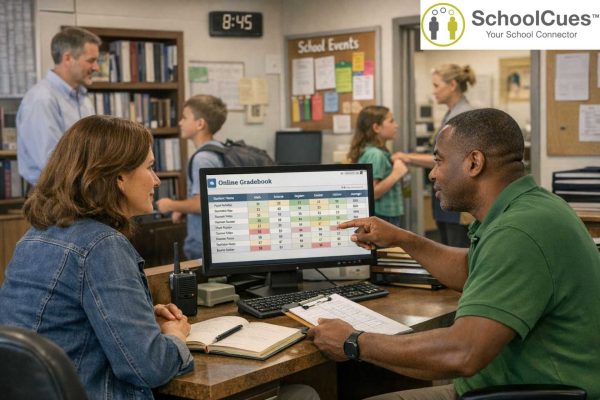
Schools are steadily rethinking how academic data is managed, shared, and used across daily operations. As expectations grow around transparency, accuracy, and timely communication, traditional grading methods often struggle to keep up. Online gradebook software offers a practical path forward—one… Continue Reading →