For a lot of small and mid-sized schools, day-to-day operations have quietly become harder to manage. Attendance, admissions, fee tracking, communication with parents, academic records, and reports—each task on its own is manageable, but together they can take up a lot of time and energy, especially when staff are already stretched thin.
That is why in 2026, more schools are making a shift toward a cloud-based school management system. It is not really about chasing new technology. It is more about finding a simpler way to run the school without adding more pressure on administrators and teachers.
Why schools are moving away from older systems
Many schools still rely on a mix of spreadsheets, standalone tools, or older on-premise software. These systems often worked fine years ago, but they tend to create gaps when schools grow or when expectations increase.
For example, attendance might be in one system, fees in another, and communication happening somewhere else entirely. That means staff are constantly switching between tools or entering the same information multiple times.
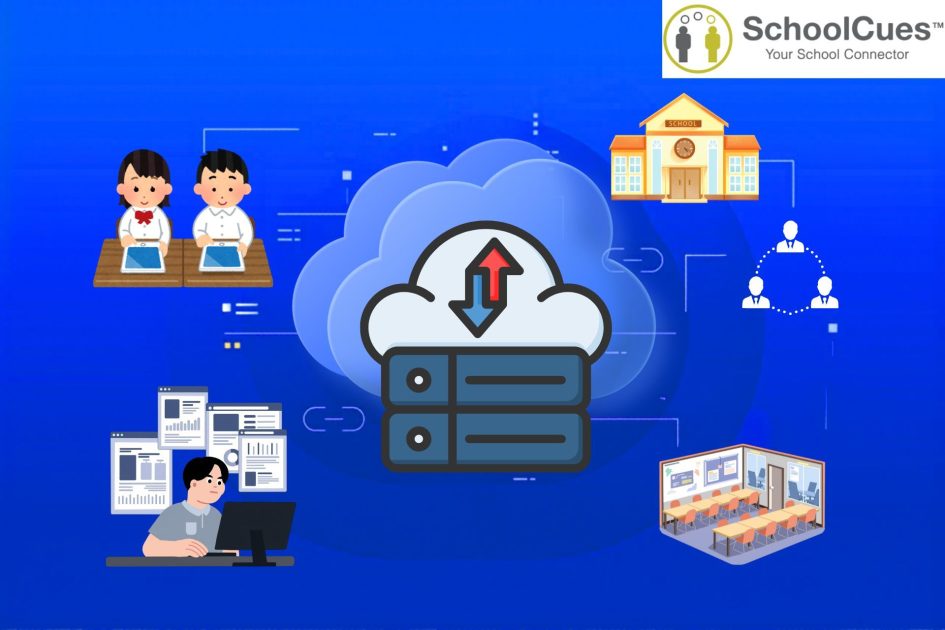
A cloud school ERP brings everything into one place. In many cases, it also functions as a student information system, helping schools manage student records more efficiently. Because it runs online, it removes the need for local servers and makes data accessible from anywhere. That alone simplifies a lot of everyday work for school staff.
What is actually driving the shift in 2026
Schools are not switching just because cloud systems are popular. There are a few very practical reasons behind it.
Lower cost pressure
Budget matters a lot for smaller schools. Traditional systems often come with upfront hardware costs, IT maintenance, and occasional upgrade expenses. Those costs add up over time.
A cloud system usually works on a subscription model, which makes it easier to plan expenses. Schools are not paying for infrastructure they do not need. For many, this is one of the biggest reasons for switching.
Less manual work for staff
One of the biggest day-to-day challenges in schools is repetition. Entering the same data in multiple places or updating records manually takes time away from more important tasks.
With school software online, a lot of this becomes automatic or centralized. Attendance, student records, fee tracking, and reports can all be managed in one system. This kind of setup—often supported by student management software—reduces duplication and helps staff stay organized without extra effort. Schools exploring cost-effective options often investigate budget-friendly SIS tools to improve efficiency without increasing operational costs.
Easier access for everyone involved
A cloud-based system does not tie information to one computer or office. Teachers can update records from home, administrators can check reports remotely, and parents can log in to see updates when needed.
This kind of access has slowly become expected rather than optional. It also reduces the number of phone calls and manual follow-ups schools have to deal with.
Fewer technical headaches
Older systems often require updates, maintenance, and occasional troubleshooting. In smaller schools without dedicated IT teams, this can become a burden.
Cloud platforms handle updates in the background. Security patches, feature improvements, and system upgrades happen automatically. Schools do not have to pause operations or rely on outside help every time something needs updating.
Room to grow
Even small schools think long term. As enrollment grows, systems need to keep up without becoming complicated or expensive to replace.
A cloud-based school management system is usually easier to scale. Adding new students, staff, or features does not require a full system overhaul. That flexibility is part of why schools are making the switch earlier rather than later.
Communication has become a bigger priority
One area that has changed a lot in recent years is communication. Parents now expect faster updates and clearer visibility into their child’s progress.
Instead of relying on printed notices or scattered messages, cloud systems bring communication into one place. Announcements, reminders, attendance updates, and academic information can all be shared through the same platform.
It does not necessarily replace personal communication, but it reduces delays and confusion. Schools spend less time chasing updates and more time actually managing them.
As more schools move toward cloud systems, the focus is shifting toward simplicity. Not every school needs a complicated enterprise-level platform. Many are looking for something that just works without a steep learning curve.
This is where platforms like SchoolCues come in. It is designed with smaller schools in mind, focusing on essential functions like attendance, communication, and fee management in a straightforward way. Schools that want to simplify billing often explore online tuition payment solutions to streamline how fees are collected and tracked.
For schools moving away from disconnected tools, having something that feels manageable can make the transition much smoother. It is less about adding features and more about making daily operations easier to handle.
Why 2026 feels like a turning point
A few things are coming together at the same time. More schools are comfortable with cloud tools now. Parents are more used to real-time updates. And schools are under more pressure to operate efficiently without increasing costs.
At the same time, cloud platforms have become more affordable and easier to use. That combination is pushing even traditionally cautious schools to reconsider their systems.
Common concerns schools still have
Even with all the benefits, some hesitation is normal.
Security is usually the first concern. Schools want to make sure student data is protected. Most modern cloud systems now use strong encryption and follow strict compliance standards, but it is still something schools need to evaluate carefully.
Internet reliability is another concern, especially in areas where connectivity is inconsistent. However, many platforms now offer offline-friendly features or automatic syncing when the connection returns.
There is also the learning curve. Any new system takes some adjustment. But compared to older tools, most cloud platforms today are designed to be more intuitive, which helps reduce training time.
What this shift really means
At its core, the move toward a cloud-based school management system is not really about technology. It is about making school operations less fragmented.
When information is centralized, staff do not waste time searching for data. When processes are automated, fewer mistakes happen. When communication is clear, parents stay more engaged without extra effort from school staff.
For small and mid-sized schools, those improvements can make a noticeable difference in how smoothly the school runs day to day.
The shift toward school software online and cloud school ERP systems is not happening because schools want to modernize for the sake of it. It is happening because the old way of managing things is starting to take too much time and effort.
In 2026, schools are looking for systems that are affordable, simple, and flexible enough to grow with them. Cloud-based platforms are fitting into that gap.
For many schools, the goal is not to add more tools. It is to finally bring everything into one place so the focus can stay where it belongs—on students and learning.
Simplify School Operations Without Adding More Work
Managing multiple tools, manual processes, and constant follow-ups can slow your school down. A cloud-based system helps bring everything together so your team can focus more on students and less on admin tasks.
If you are exploring a simpler, more efficient way to manage your school, it might be time to see how it works in practice.
Request a demo today and see how a cloud-based school management system can fit into your daily operations.