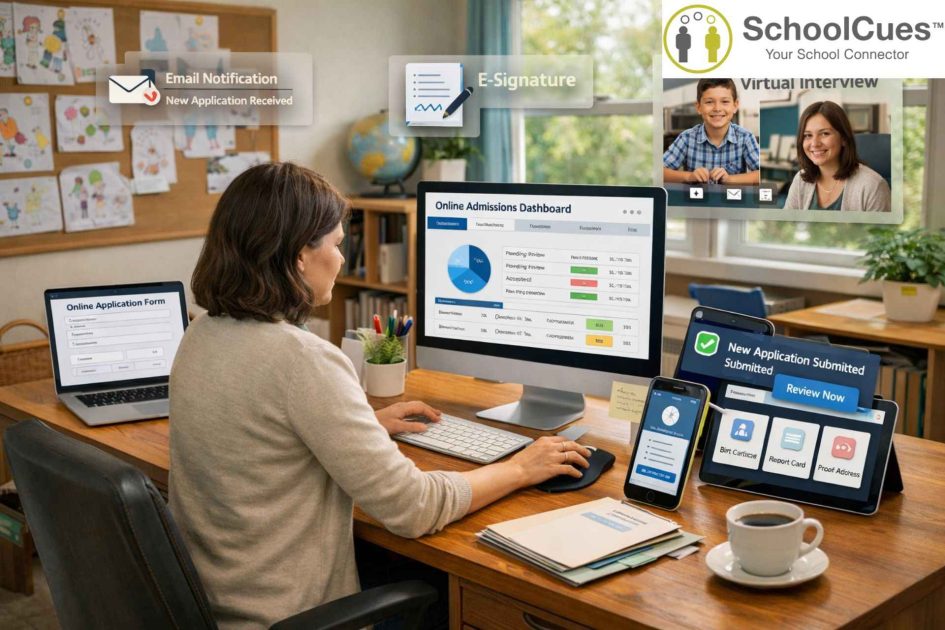
For small and private schools, admissions are often handled by a small team juggling many responsibilities. When inquiries are tracked in spreadsheets, applications arrive as PDFs, and follow-ups rely on manual reminders, the process quickly becomes overwhelming. Even worse, delays and missed communication can leave families with a poor first impression.
Today’s parents expect a smooth, digital experience—clear communication, easy online forms, and timely updates. A fully digital admissions workflow helps small schools meet these expectations while reducing administrative burden. When admissions tools connect with broader School Management Solutions, schools can improve parent communication, speed up decision-making, and ensure a seamless transition into enrollment, attendance, and the gradebook.
According to EdTech Magazine, schools that adopt unified digital systems—rather than relying on disconnected tools—see improved operational efficiency and stronger engagement with families. Integrated technology helps schools streamline workflows, reduce administrative strain, and deliver a more consistent experience for parents throughout the admissions and enrollment process.
What Does Digital Admissions Workflow Look Like?
A digital admissions workflow manages every stage of the admissions journey online—from the first inquiry to confirmed enrollment. Instead of using multiple disconnected tools, schools rely on admissions and enrollment software for small schools to centralize data, automate tasks, and maintain visibility across the entire process.
Why This Matters for Small Schools
- Fewer manual tasks for staff
- Faster, more consistent responses to families
- Reduced errors and duplicate data entry
- A professional, organized admissions experience
For small schools with limited staff and resources, these benefits make a measurable difference.
Step 1: Capture and Organize All Inquiries
Every prospective family interaction matters. Whether an inquiry comes from a website form, email, phone call, or open house, it should be captured automatically in one system.
A centralized inquiry dashboard allows staff to:
- Track each family’s status
- Assign follow-up tasks
- View communication history in one place
This ensures no inquiry is forgotten and every family receives prompt attention.
Step 2: Automate Follow-Ups and Communication
Speed and consistency are key to successful admission. Automation helps schools respond quickly while still maintaining a personal touch—an important factor as parent expectations around communication and responsiveness continue to rise. In fact, failing to meet parent expectations can directly impact enrollment decisions.
Using admissions and enrollment software for small schools, schools can automate:
- Inquiry confirmation emails
- Application deadline reminders
- Notifications for missing documents
This automation strengthens parent communication by delivering timely, clear updates without relying on staff to manually track every step. Admissions teams gain better visibility into progress while freeing up time for meaningful, relationship-driven conversations with families.
Step 3: Offer Online Applications and Digital Document Collection
Paper applications slow the process and frustrate families. Digital workflows replace them with secure online forms that parents can complete anytime.
Schools can collect:
- Applications and student information
- Academic records and recommendations
- Supporting documents and forms
All files are stored securely and linked to the applicant profile, making review faster and more organized.
Step 4: Simplify Interview and Assessment Scheduling
Coordinating interviews and assessments can create unnecessary back-and-forth emails. Digital scheduling tools eliminate this friction.
Families can:
- View available time slots
- Book interviews online
- Receive automatic reminders
This reduces missed appointments and keeps staff calendars organized.
Step 5: Streamline Internal Review and Decisions
Once applications are complete, admissions teams need an efficient way to review candidates. Digital workflows allow staff to collaborate without confusion.
Key features include:
- Internal notes and evaluations
- Status tracking and approvals
- Clear documentation of decisions
This transparency supports fair decision-making and faster turnaround times.
Step 6: Convert Accepted Students into Enrolled Students
After acceptance, the enrollment process should be simple and fast. Digital admissions systems support online acceptance letters, enrollment forms, and electronic signatures.
Once enrollment is confirmed, student records are automatically created—eliminating duplicate data entry and reducing errors.
Step 7: Connect Admissions to School Operations
Admissions should flow directly into daily school operations. When admissions tools are part of a unified School Management Solution, student data connects seamlessly to systems that manage attendance and the gradebook.
This integration:
- Saves staff time
- Improves data accuracy
- Ensures a smooth start for new students
Teachers and administrators begin the school year with accurate, complete information.
Best Practices for Small Schools Going Digital
To ensure success, small schools should:
- Start with essential features and scale gradually
- Train staff and communicate changes clearly to families
- Choose tools designed specifically for small or private schools
Affordability, ease of use, and strong communication features are essential.
Common Pitfalls to Avoid
- Using disconnected systems that don’t share data
- Overcomplicating workflows
- Overlooking the parent experience
The goal is simplicity, clarity, and consistency.
Building an Admissions Experience Families Trust
For small and private schools, a fully digital admissions workflow is more than an operational upgrade—it’s a strategic advantage. By centralizing inquiries, automating communication, and connecting admissions with enrollment and daily operations, schools can deliver a professional and welcoming experience that builds trust with families.
When admissions and enrollment software for small schools is integrated with broader School Management Solutions, schools strengthen parent communication, reduce administrative strain, and ensure a seamless transition into attendance and gradebook systems.
A thoughtful digital admissions process allows small schools to focus less on paperwork and more on what matters most, supporting students and serving families with care and confidence.
Explore SchoolCues today and take the first step toward a smarter, fully connected admissions and school management experience.